Monday, 11 May 2009

Strangest wars ever

1.
The Pig War:triggered by the shooting of a pig

The Pig War was a confrontation in 1859 between American and British authorities over the boundary between the United States and British North America. The specific area in dispute was the San Juan Islands, which lie between Vancouver Island and the North American mainland. The Pig War, so called because it was triggered by the shooting of a pig, is also called the Pig Episode, the Pig and Potato War, the San Juan Boundary Dispute or the Northwestern Boundary Dispute. The pig was the only "casualty" of the war, making the conflict essentially bloodless.

2.
Three Hundred and Thirty Five Years' War: lasted over 335 years with no casualties

The Three Hundred and Thirty Five Years' War (1651–1986) was a war between the Netherlands and the Isles of Scilly (located off the southwest coast of the United Kingdom). It is said to have been extended by the lack of a peace treaty for 335 years without a single shot being fired, which would make it one of the world's longest wars and the war with the fewest casualties. Despite the uncertain validity of the declaration of war, peace was finally declared in 1986.

3.
Moldovan-Transdniestrian War: where both sides’ officers would drink together during the nights and fight during the days

After the Soviet Union collapsed, two-thirds of Moldova wanted closer ties with Romania and neighbours to the west. But the area of the country to the east of the Dniestr river wanted to stay close to Ukraine and Russia. War broke out, and the east split to form Transdniestria, which remains unrecognised by the world.

When Moldova and Transdniestria started fighting, it was a weird war. The local military called it the Drunken War, as officers of the combatants met every night to have a drink together. They went away in the morning and opened fire on each other. At night, they got together again to drink for those they had met with the previous night and who they had killed.

4.
The Football War: started with a football game


The Football War ,was a five-day war fought by El Salvador and Honduras in 1969. It was caused by political conflicts between Hondurans and Salvadorans, namely issues concerning immigration from El Salvador to Honduras. These existing tensions between the two countries coincided with the inflamed rioting during the second North American qualifying round for the 1970 FIFA World Cup; on 14 July 1969, the Salvadoran army launched an attack against Honduras. The Organization of American States negotiated a cease-fire which took effect on 20 July, with the Salvadoran troops withdrawn in early August. El Salvador ended up going to the 1970 FIFA World Cup1970 FIFA World Cup, where they failed to advance from the Group Stage.

What do You think about those conflicts?
Maybe You can chose the favourite one;)?

Saturday, 9 May 2009

Wedding spirit


There was a lot of beer-related posting recently. In response I sad that I prefer variety of liquor's colors. So I'd like to write here about the liquors errhhh I mean alcohols that are related to weddings.
Firs of all the champagne required for toast. The champagne flute is obligatory here to underline that this wine is really sparkling ;-)
I've never heard about beer served on a wedding reception. Did you?
I've never seen any open-bar at polish wedding too. However I think I would find that very pleasant... What do you think about that? Or maybe you would like a alcohol-free type of wedding?
Of course in Poland vodka takes the major place on all weddings. I personally don't know how people can find any difference in taste of our polish vodka brands. For me all of those brands are terrible inventions of post-PRL age without any roots in our tradition and good taste. I'd love Poland to have an traditional well known tasty alcohol like anise-flavored spirits, whiskey, or brandy.
I received a gift on my wedding --- a bottle of 12-year old Metaxa from Greece. It's a very intence tasty and strong alcohol made mainly from grape. Grape grown on sun, than are picked, some of them are magically transformed into muscat wine added to the mixture, other are used sun-dryed, everything is distillated and transformed into liquor, mixed together with many ingredient that are keept in secret and left for years in oak barrels. Real passion is needed to make something like that. And the final taste is incredible. I really wish that poland had some special alcohol like that...maybe made from apples?! We had apple wine in the far past... It's such a petty that we lost our tradition in years of wars and occupation...
What do you think about it?

(all images from wikipedia commons released under creative commons license)

Friday, 8 May 2009

Carbon Footprint

Carbon Footprint is a measure of the impact human activities have on the environment in terms of the amount of green house gases produced, measured in units of carbon dioxide.

Another day I read in The Focus magazine (December 2008) an article on an influence of eaten food on an the global warming. At first I was very skeptical and even laughed out the idea. Nevertheless I read the article and now I feel a bit brainwashed.

Here is a bit of what I have found in that article.
A annual carbon footprint of an average household is 8.1 tons which is almost twice of the CO2 emitted by car (19 000 km/year, 9l/100km) per year. Scientists started to measure how much of gases are emitted during a production of food. The calculations are very complex because every joule of energy must be analyzed on a the way from a field to a fork. In case of meat methane and nitrogen have to be also considered. Methane stays in the atmosphere from 9 to 15 years and holds warmth 21 times better than CO2. Even worse is nitrogen oxide released from fertilizers and stable manures. That gases make warmth accumulate in the atmosphere 296 times more than CO2 and remains more less 114 years.

So, what is measured?
For instance when you want to find out how much you influenced the environment having a chicken breast for dinner you need to consider:
1. Production of granulated feed
a. Cost of fertilizers, growing, harvest
b. Processing seeds into small granules
2. Heating huge buildings for quarter million birds
3. Gases produced and energy used by slaughterhouses, processing plants, factories that produce packages
4. Transport from/to slaughterhouses, factories, warehouses, stores, houses,
5. Storage of flesh in freezers
6. Cooking


The chicken is a rather simple example. If the process is longer and more complex it is harder to calculate the production of CO2.
Astrid Scholz created a carbon calculator. The program doesn’t show any specific calculations but we can find out for instance that a hard-boiled egg emits 333 grams of CO2, a bowl of cereals with milk 1224 grams (like an SUV on distance of 6km). But the worst problem is red meat. For each kilogram of chicken 2.3kg of seeds is needed, for kilogram of pork – 5.9kg and for beef even 13kg of seeds and twice more of hay. Not to mention methane and nitrogen.

400g of beef = 6400 g CO2 eq
4 big apples = 110 g CO2 eq
1kg of potatoes = 240 g CO2 eq
1l of milk = 1050 g CO2 eq
1kg of carrots = 45 g CO2 eq
1kg of onion = 80 g CO2 eq
300g of cheese = 2600 g CO2 eq
300g of tomatoes = 2800 g CO2 eq
6 eggs = 1650 g CO2 eq 1
50g of salmon = 300 g CO2 eq
25g of potato crisps = 55 g CO2 eq

CO2 eq - unit is obtained by converting all emitted greenhouse gases during a production a product into such amount of CO2 that would cause the same warming of the atmosphere.

Well… it brings thousands of questions on my mind.
Does it mean we have to stop eating meet and many tasty things and be confined to a selection of products determined by someone? How far can we believe in such articles and scientists? Or maybe it’s really the only way for us to help the environment? What do you think?

Thursday, 7 May 2009

I haven't participate in many weddings. However I know some traditional stuff which I find really funny. I really enjoy "the carriage" game where people play roles of different parts enclosed in that old-style vehicle. As far as I know it's very common in our country just like throwing glasses for good luck. However I know another tradition that is not so common nowadays and only cultivated on west area of our country. It's called polterabend and shortly it's a small party for neighbors and friends who won't be invited to the wedding. However to fully obey the tradition everyone dress funny (men in pink dresses are desired just like women wearing devil's horns). The party takes place in garden of bride's parents and the . Everyone come with bags full of paper scups and old dishes to be broken. Then they make a extreme mess out of the backyard and next morning the engaged couple is supposed to clean up the place --- and feel that the merriage is a lot of hard work...


Well maybe it's not so pleasant tradition for the marrying couple but it's a lot of fun for the guests... For sure we can be glad that "tradition" of "right for the first night" past years ago...

Are there any special wedding traditions in the region you come from?
Do you know any foreign traditions you find funny or disgusting?

Tuesday, 5 May 2009

Wedding


Yes, I got married three days ago. And in the end I find it inspiring for writing this post ;-) I had a lot of work to arrange everything that was needed. I thought that bringing to life the vision of a small decent wedding is somewhere around making ten phone calls but nooo real life has to be way complicated than that... It's not that simple to arrange an table for tens of people. You have to go through every single dish from the menu and think about it. What wine would your's fiancée mother enjoy to that meal? Do you have anyone who's allergic to cumin? Are you away of the fact that the cumin is used in many other spices? What to wear? Classic white dress for bride or the crazy red one? What suite will that go with? Why not a white tuxedo which I was dreaming for from my childhood? What will the priest think about that cool red dress? What about photos taken open air? Who will make them? I'd like a ring made of white gold but they add nickel to make it be white...I'm allergic to nickel. Am I?!
Oh the wedding was so small but still so many questions...

I'd like to know what do you think about all that fancy weddings? Spending a lot for dress and restaurants?
How do you imagine your wedding? Or how was it? :-)
Do you feel ready to take that step?


Images taken from: Wikipedia (creative commons license) and redhotbrides.com photo by Jason Schmidt.

Sunday, 3 May 2009

Beer collectibles


We have seen our colleague’s board games collection so there is at least one person familiar with collectibles on this blog.
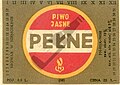
I’d like to introduce you to beer collectibles, or as we could call it - breweriana collectibles. Among the first beer collectibles were bottle caps, or crowns and labels, but nowadays it also includes beer cans, bottles, glassware, openers, tin signs, beermats(a coaster), drop catchers, and any other kinds of advertisers like pens, neon signs etc

The history of beer labels is much younger than the beer itself. Until XIX century, the beer haven’t been poured into bottles. And then the need of marking bottles appeared. The oldest labels of Tyskie Browary Książęce date back to the 20s of our century. World largest beer labels collection contain more than a two hundred thousand items.
Beer glassware also refer to beer steins – a traditional beer mug, made of pewter, silver, wood, porcelain, earthenware, or stoneware; and with open tops or hinged lids

The need for bottle openers starts with the bottle cap. Bottle cap is an innovation of the 1890s
Drop catcher is a small piece of absorbent paper put on the bottom of a beer glass to avoid that liquid contaminates the table, it differ from beermat, which is a coaster used to rest glasses of beer upon

So, you are a collector who wants to trade or exchange your breweriana, there is a perfect place where you can do both, and even more – it’s a beer festival and exchange fair held each year in Zywiec. Homebrew contest also takes place during the festival. More than five thousand visitors and almost two thousand exhibitors showed up last year. There is also a chance to visit old Zywiec brewery and museum. By the way, there is also very nice place in Tychy, where the old building dating back to 1902 was converted into Tyskie museum of beer and brewing.
I’d like to ask you, do you collect anything, and maybe you participate in some community events?

Friday, 1 May 2009

Home brewing and "the product"

Homebrewing – a hobby, tradition, a search for the new taste?
So what do we need to brew our own beverage? Actually not much, in a nutshell, some malt, hop, yeast, one big pot, a bucket, thermometer, big spoon, some sugar, empty bottles, few liters of water and few hours in the kitchen. I’ll skip some details, and we can divide the whole process into few stages

1. First, crushing the malt – we can use coffee grinder or just buy the malt that was already prepared.
2. then the mashing – combining a mix of malt with water,
3. heating the water in the pot to 62-64degrees for 30minutes, then increase the temperature to 70dg for another 30minutes, and the last stage is 78dg for 5minutes.
4. After mashing and boiling the liquid is called wort and the next step is to separate this liquid extract from the scraps of malt found in the mash – the filtering.
5. We add the hops to the wort and again boil it for 75minutes.
6. After boiling the wort is preferably cooled to a room temperature and the yeasts are added, and the fermentation begin.
7. After 2 weeks we transfer our beer to bottles, add cup of sugar and wait another 2 weeks for final fermentation.


So whole process takes about 4-5weeks. Looks difficult? Well it's not. And buying homebrew starters kit simplify the process even more.
But is it worth to spend few hours preparing the beer and then waiting few weeks to actually taste it? In the era of mass production, where everything is based on providing the same standardized product where the quantity not quality matters people tend to search for “premium” products. Whole foods, good quality meats and sausages, breed etc. As for beers, small breweries don’t have a huge selling power, it’s rather unlikely that you find something besides big beer consortiums in your local shop. Major problem is the channel of distribution. What’s quite new for Poland is a brewpub which is a pub or restaurant that brews beer on the premises. There are sixteen different brewpub in Poland, and 2 in Warsaw – Bierhalle (Arkadia and Nowy Świat) and BrowArmia. Have you ever been to one?
Once you taste beer from small, traditional brewery which use old recipes and methods for brewing(especially unpasteurized and unfiltered ones) you will realize there’s nothing special about e.g. Żywiec. My question is, do you seek better products? Is everything what we see on tv, magazines etc is really that good? Does small, more natural manufacturers need advertising? Maybe you bake your own bread?

photo courtesy of browamator.pl